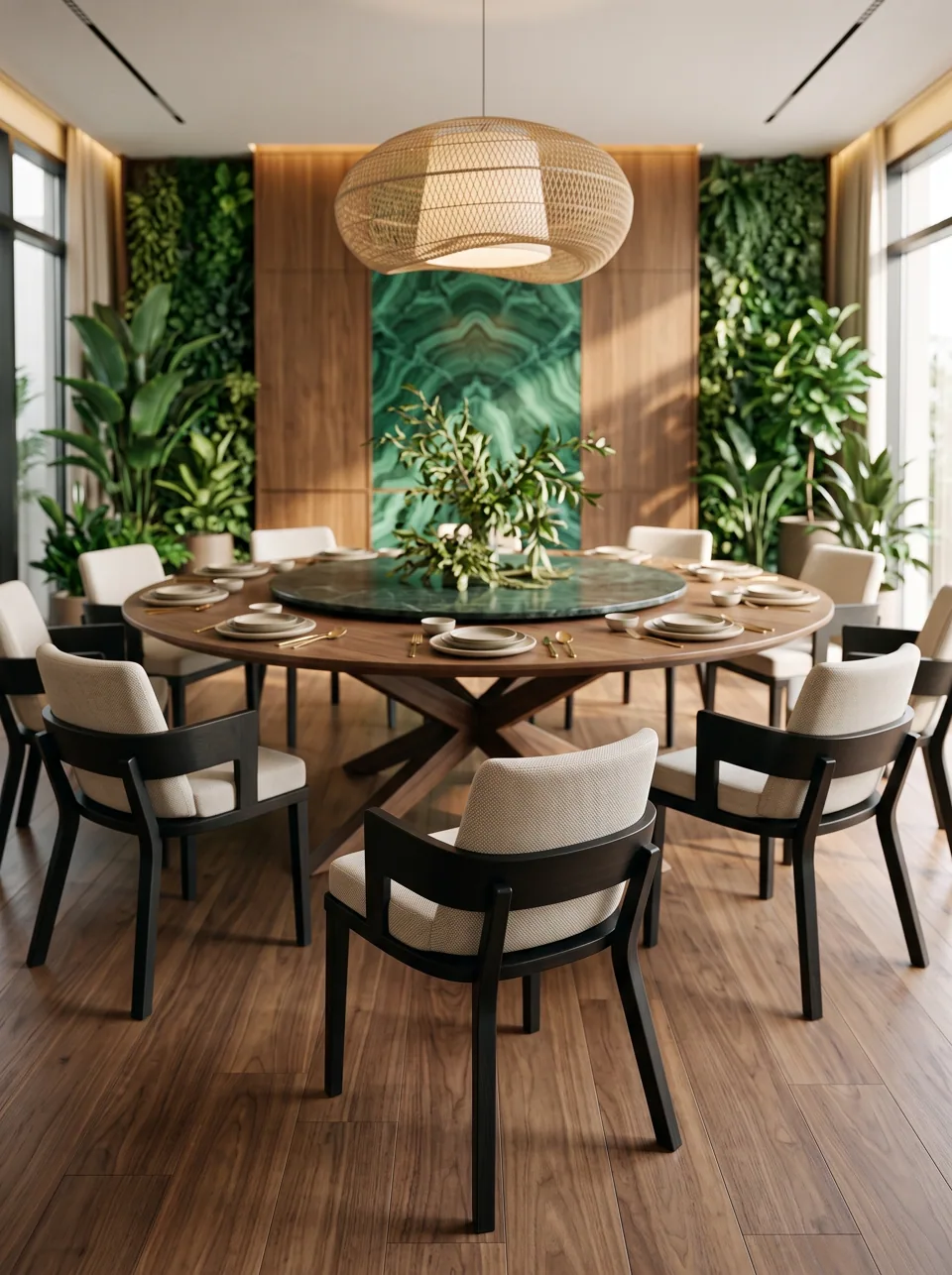
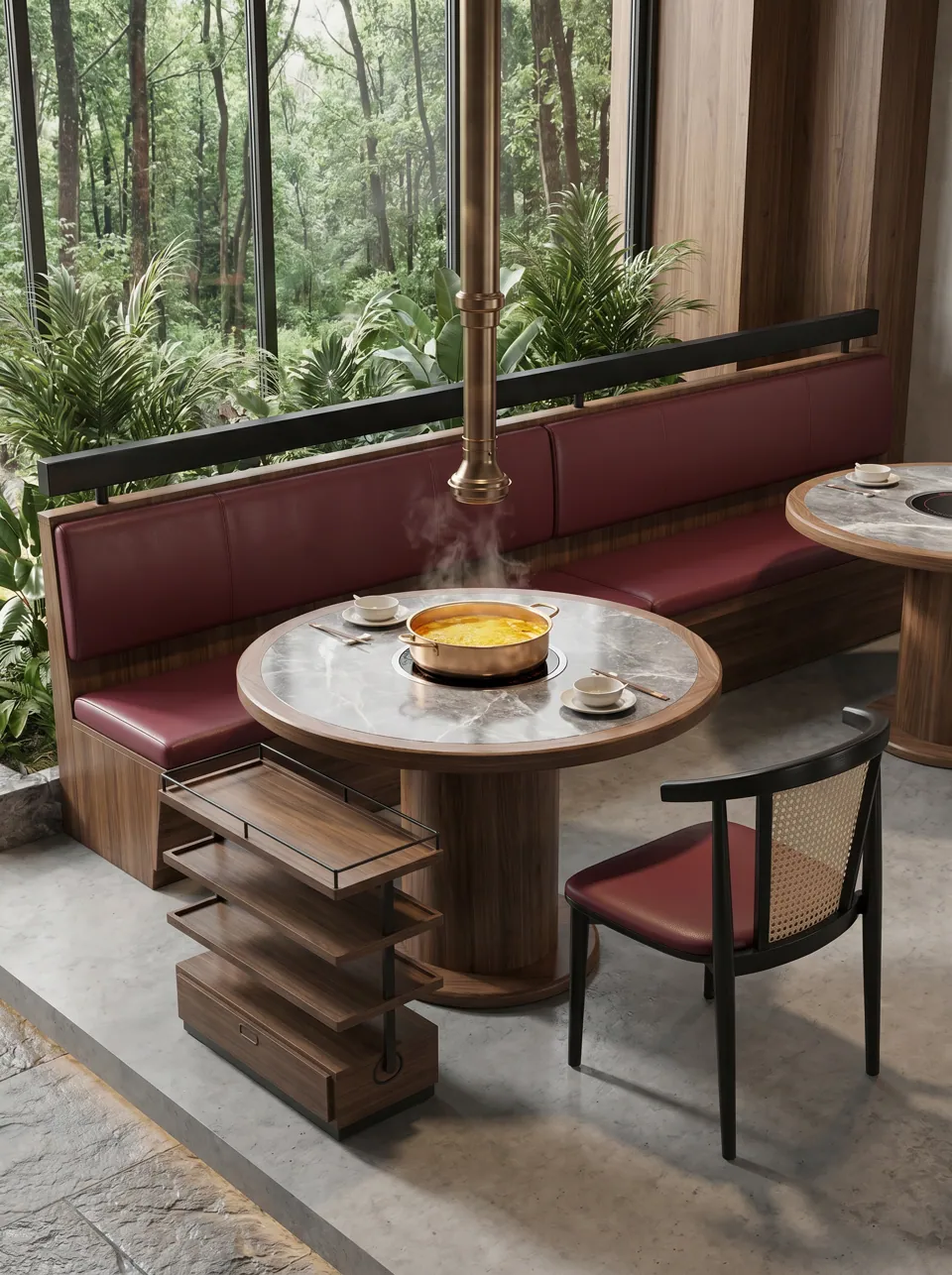
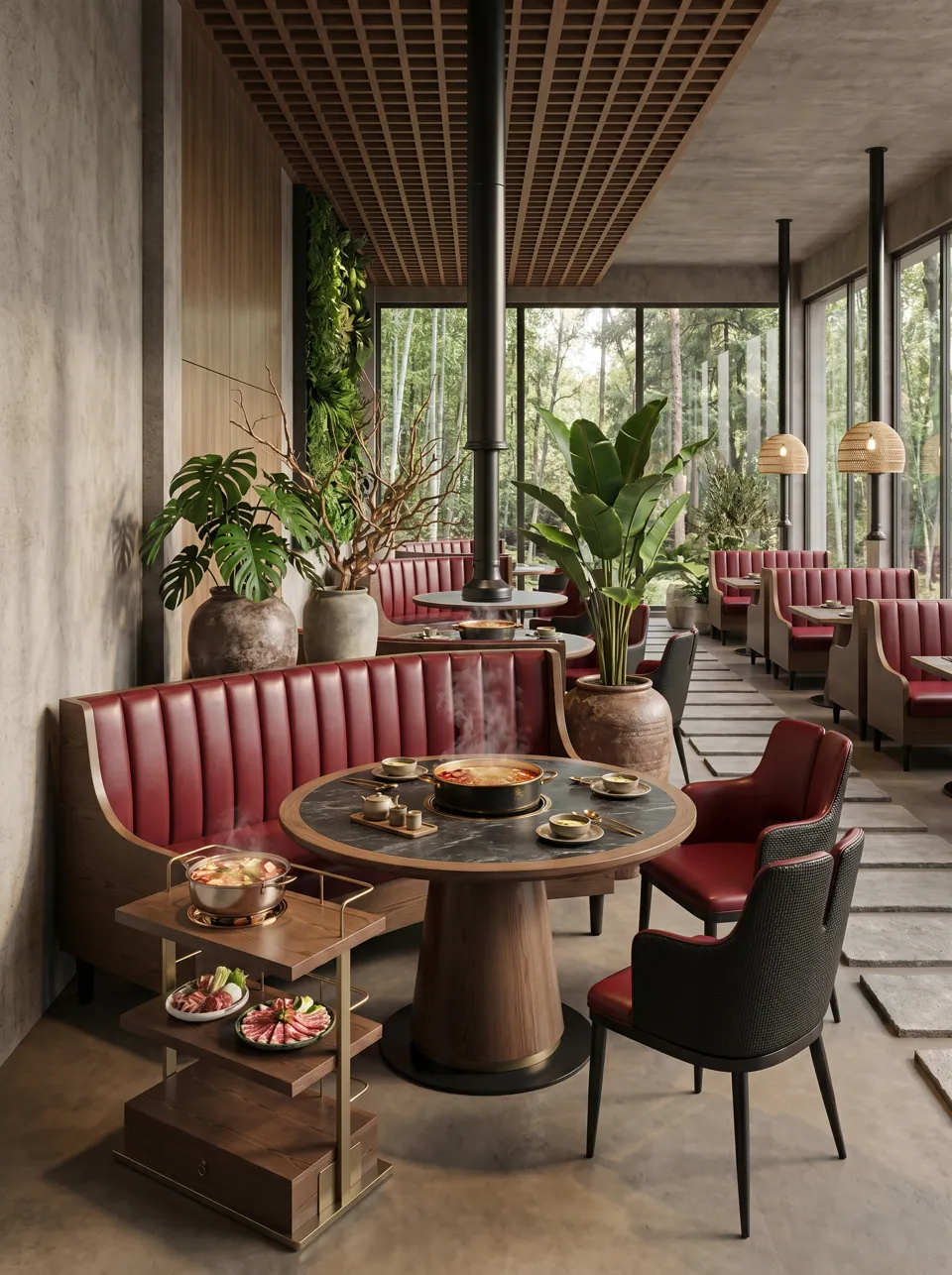
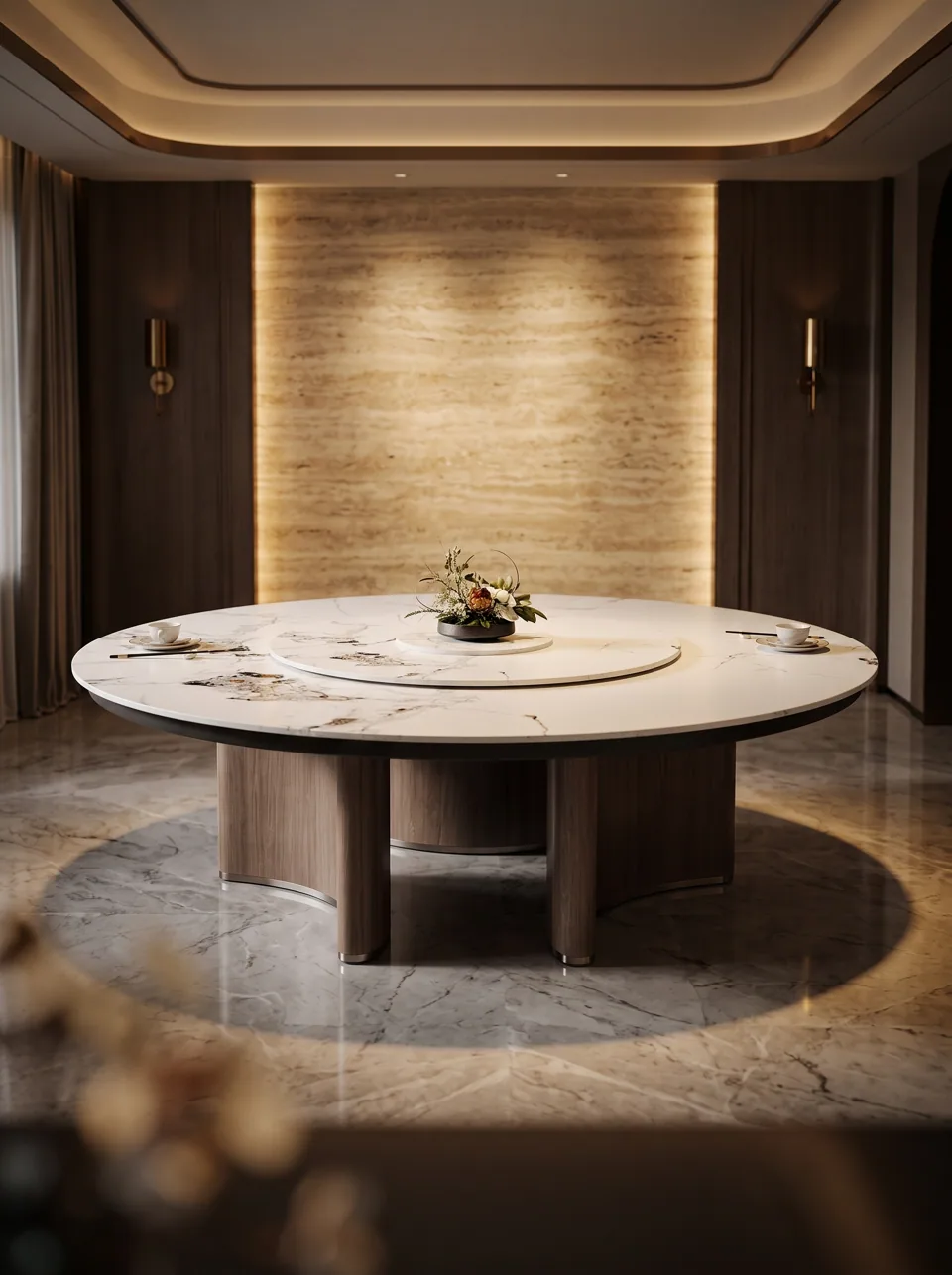
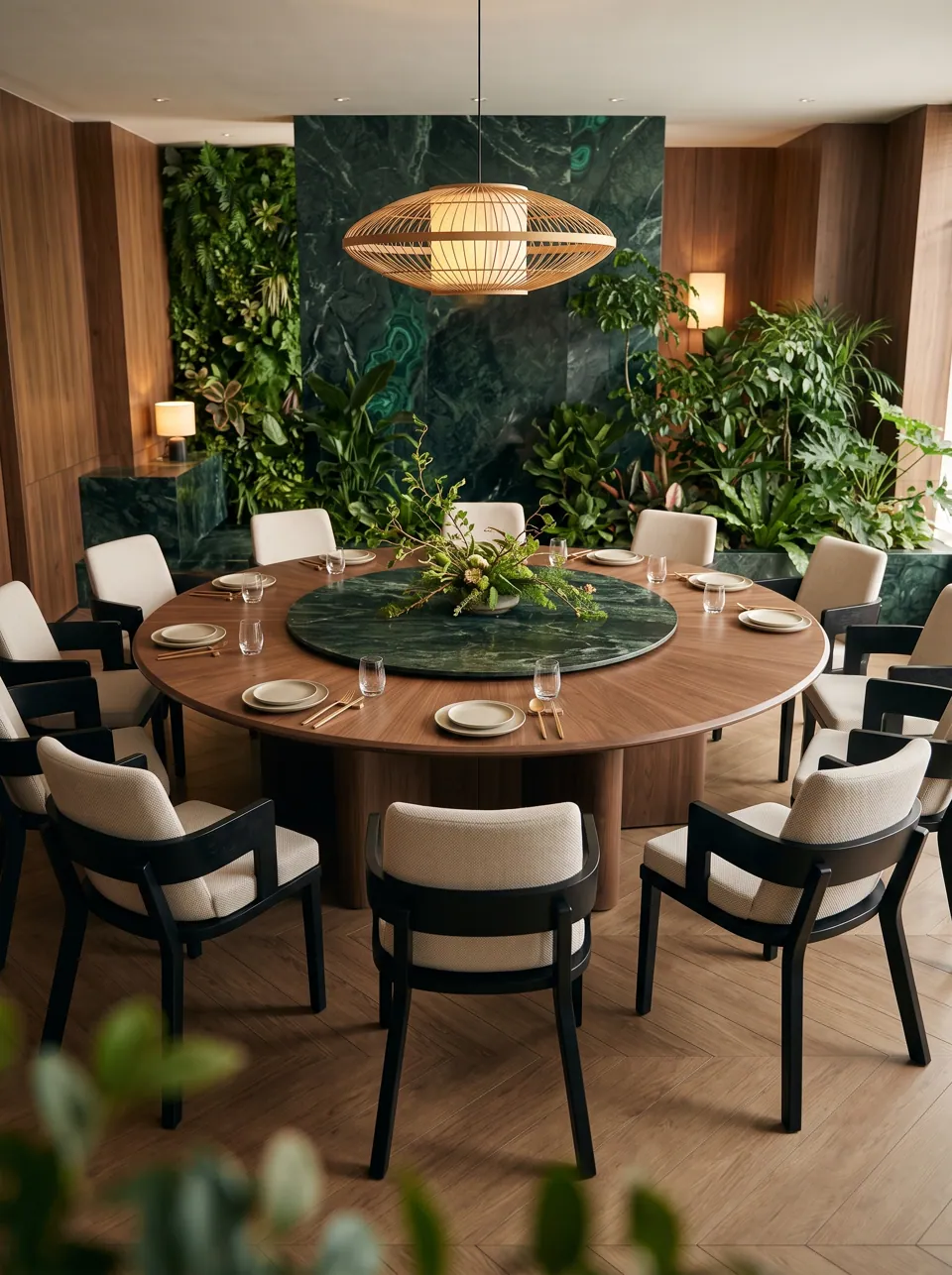
Round tables solve two different problems in an Asian restaurant. Small rounds with one center pot suit groups of four to six who want to share a single broth. Large banquet rounds with a turntable carry the family-style meals and celebrations that fill private rooms.
Round hot pot tables use a pedestal or drum base so legs do not collide with knees around the circle, and a single center cutout so everyone reaches the pot equally. A 36-42 in (90-107 cm) top seats four; 47-55 in (120-140 cm) seats six.
Banquet rounds are sized by the number of guests, with a lazy Susan roughly 40-45% of the table diameter so dishes reach everyone without guests standing.
| Diameter | Seats | Typical lazy Susan |
|---|---|---|
| 59 in (150 cm) | 8 | 24-28 in (60-70 cm) |
| 71 in (180 cm) | 10 | 28-32 in (70-80 cm) |
| 79 in (200 cm) | 12 | 32-35 in (80-90 cm) |
| 94 in (240 cm) | 14-16 | 39-43 in (100-110 cm) |
Allow roughly 22-24 in (56-61 cm) of rim per guest. Very large rounds are built as a split top on a sectional drum base so they fit through doors and into a container. Tops can be sintered stone, marble-look porcelain or wood veneer, and the turntable can be glass, stone or wood on a commercial bearing.
Choosing between round and square for hot pot: rounds suit groups that share one broth and tend to linger; squares and rectangles pack more tightly along walls and in booth bays. Most of our clients mix both, with rounds in corners and private areas.